

The mobile app market is more competitive than ever. In 2025, users downloaded over 140 billion apps from the App Store and Google Play worldwide. However, more than 4 million apps are already competing for users’ attention, making it harder for apps to stand out and gain downloads. If your goal is to boost app downloads and installs, standing out has never been more important — or more difficult.
A great app alone is no longer enough to drive downloads and installs. Developers need proven strategies to improve app visibility, attract users, and grow downloads.
This guide explains how to boost app downloads and installs with 11 proven strategies. It covers ASO, organic content, paid acquisition, ratings and reviews, retention analytics, and other key app growth strategies. These strategies help apps improve visibility, attract users, and build sustainable growth.
Boost App Downloads with a Strong ASO Foundation
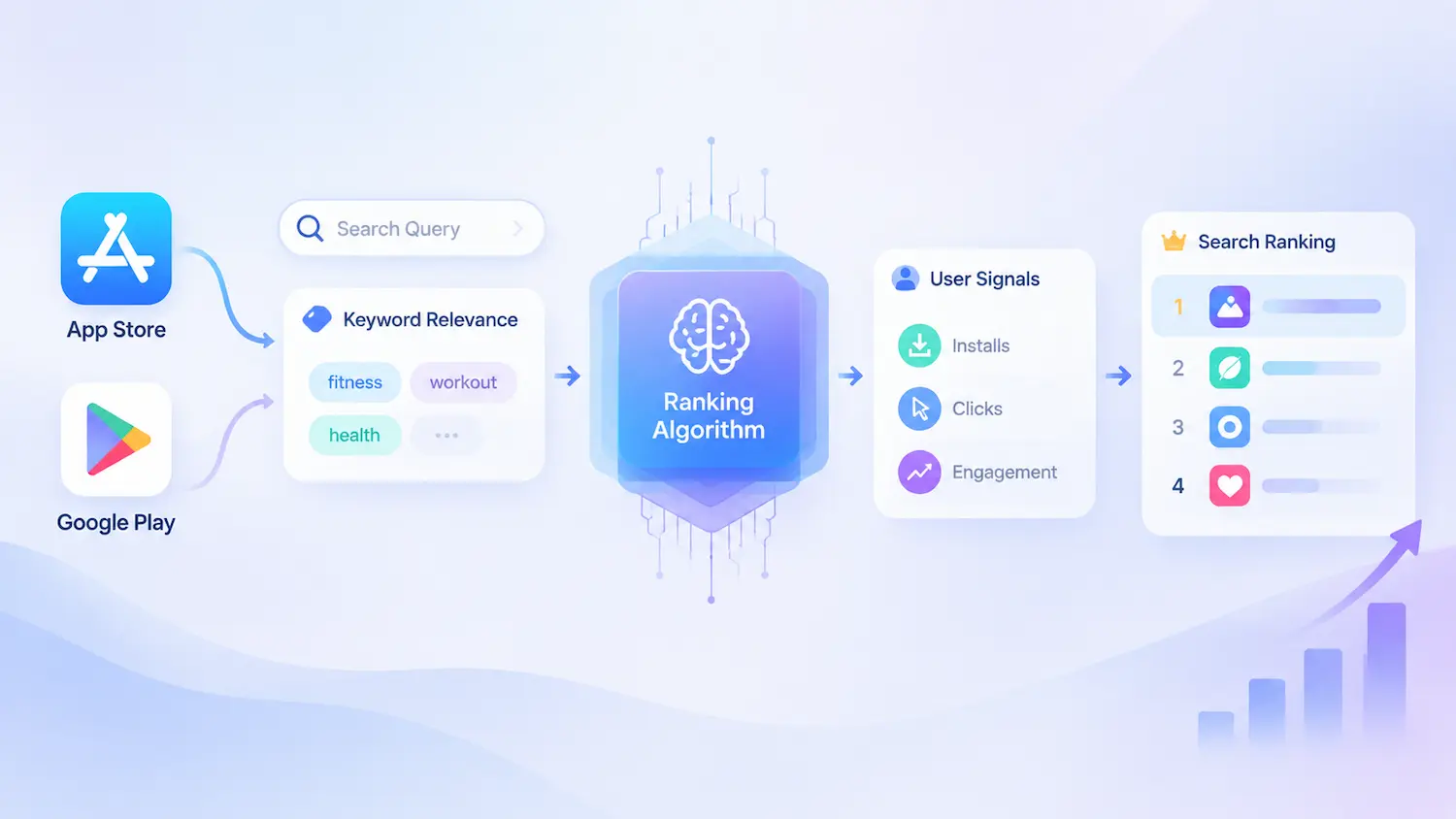
App Store Optimization (ASO) is the foundation of sustainable app growth. By optimizing keywords, app metadata, and store assets, you can improve app visibility and attract more of the right users.
A strong ASO strategy built on app store optimization best practices helps app stores better understand your app and match it with relevant searches. This makes it easier for users to discover your app and boost app downloads and installs.
Optimize Keywords to Boost App Downloads and Installs
Keywords help app stores understand what your app does and when it should appear in search results. By targeting relevant iOS app keywords and placing them in the right metadata fields, you can improve search visibility and reach users with stronger download intent.
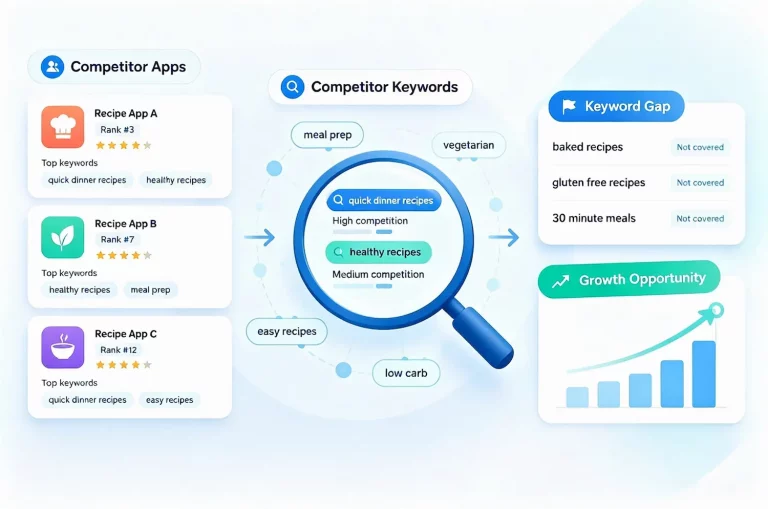
A successful keyword strategy requires more than adding popular terms. Developers should focus on keyword relevance, search volume, competition, and user intent to find opportunities with higher conversion potential. Platform matters too: the keyword set that helps you boost Android app downloads on Google Play is not the same one that wins in the App Store, so research and optimize each store’s keywords separately.
Optimize App Store Visual Assets to Boost Installs
App store visual assets play a key role in turning visitors into users. Your app icon, screenshots, and preview video help users quickly understand your app’s value and decide whether to download.
A strong visual strategy should communicate your app’s core value within seconds. Focus on the first screenshot to highlight your main benefit. Use clear, benefit-driven headlines that address user problems and solutions. Show the real in-app experience in your preview video. Continuously test different designs, messages, and layouts to identify what improves conversion rates.
| Store Listing Asset | Optimization Tips | Conversion Impact |
| App Icon | Simple, recognizable, brand-focused design | Creates a strong first impression |
| Screenshots | Highlight key features and user benefits | Shows app value quickly |
| App Preview Video | Demonstrate features and user experience | Builds trust and engagement |
| Screenshot Text | Clear headlines and benefit-driven messages | Communicates value faster |
| Localization | Adapt visuals for different audiences | Improves user relevance |
After updating your visual assets, use App Store product page optimization and A/B testing to identify which designs drive higher conversion rates.
Build an App Growth Funnel to Boost App Downloads Organically
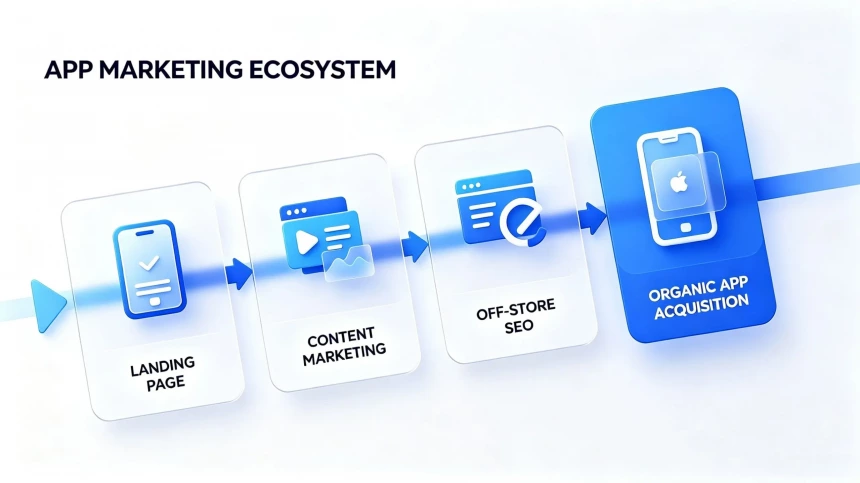
App growth does not rely only on visibility inside app stores. By combining landing pages, content marketing, and off-store SEO, apps can build an additional organic acquisition channel outside app stores.
These three strategies work together in a complete growth funnel: landing pages provide a place to convert visitors, content marketing attracts potential users, and off-store SEO improves the visibility of these assets in search engines. Together, they answer one of the most common questions in app growth: how to boost app downloads organically, without depending on paid channels.
Create Landing Pages to Boost App Installs from External Traffic
Landing pages are the foundation for converting external traffic into downloads. Although they appear at the end of the user journey, they should be built first because all traffic generated through content marketing and SEO needs a clear destination.
A well-designed app landing page should highlight the app’s key benefits, explain core features, include strong calls to action (CTAs), and provide direct download links. Elements such as screenshots, user reviews, and feature comparisons can help reduce user hesitation and improve conversion rates.
Without a dedicated landing page, traffic from search engines, social media, or other channels may only reach the App Store page or homepage, limiting conversion opportunities.
Use Content Marketing to Boost App Downloads and Engage Potential Users
After the landing page is ready, content marketing helps attract potential users by creating valuable content around their needs and search intent. Common formats include blog posts, social media content, videos, and creator collaborations.
The goal of content marketing is not simply to promote an app, but to provide useful information that helps users discover solutions before they decide to download an app.
Consistently publishing high-quality content also creates the foundation for SEO growth. More valuable content means more opportunities to rank for relevant searches and attract users at different stages of the decision journey.
Apply Off-Store SEO to Boost App Downloads
Off-store SEO helps apps get discovered outside app stores. It improves the visibility of websites, landing pages, and content in search engines like Google.
Unlike traditional SEO, off-store SEO focuses on app growth. It helps users find an app when they search for related topics, problems, or solutions.
The goal is to guide users from search results to landing pages and encourage app downloads. Key actions include keyword optimization, page structure improvements, internal linking, and backlink building.
Content marketing creates valuable materials for SEO. SEO helps these materials reach more users through search engines. Together, they build a long-term source of organic traffic and app installs.
Use Social Media and Short-Form Video to Boost App Installs
Social media platforms provide additional acquisition channels beyond app stores and search engines. Platforms like TikTok, Instagram Reels, and YouTube Shorts help apps reach new audiences through algorithm-driven content discovery.
Effective content formats include:
- Product demos: Show how the app solves specific user problems.
- Feature videos: Highlight key features and what makes your app stand out.
- User-generated content: Build trust through authentic user experiences.
- Trend-based videos: Use popular formats to expand your reach.
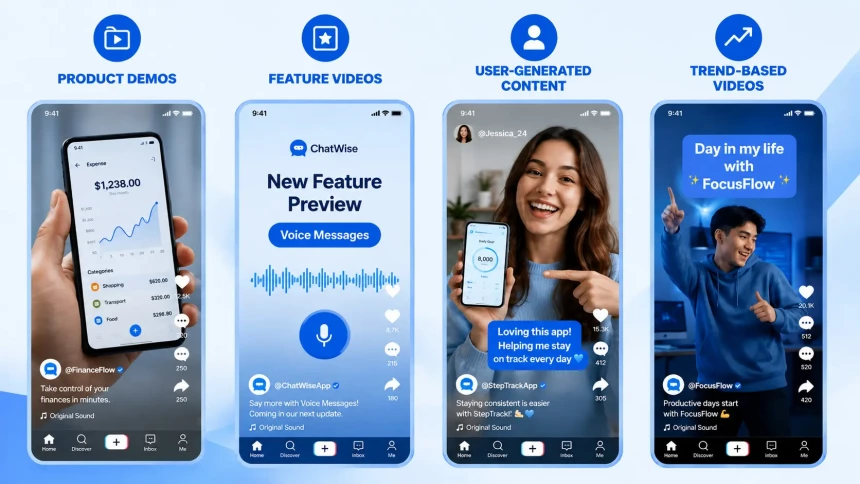
Short-form platforms distribute content based on watch completion and engagement rather than follower count, so a video that people watch to the end and comment on reaches far more people than a polished ad they skip past. Focus on creating valuable content instead of direct promotion — the wider reach that follows translates directly into more profile visits and, ultimately, more installs.
Influencer Marketing: Paid and Free Collaborations to Boost App Downloads
Influencer marketing helps apps reach the right users through trusted creators and online communities. It can raise awareness of your app and encourage more users to discover and download the app.
Paid collaborations allow apps to work with creators through sponsored posts, reviews, or video content. Micro and nano influencers are often effective because they can reach niche audiences with strong engagement.For example, Calm has worked with lifestyle and wellness creators on platforms such as YouTube and Instagram to promote its meditation and sleep features. Instead of relying only on traditional ads, Calm uses creator recommendations to reach audiences who already care about wellness, making the promotion feel more natural and trustworthy.
Free collaborations can include community engagement, user-generated content, and social media partnerships. Duolingo is a strong example of organic social media growth. Instead of relying only on paid promotions, the app built a recognizable TikTok presence through entertaining content, trend participation, and direct interaction with users. This approach helped Duolingo generate millions of organic views and attract new language learners through social sharing.
Choose influencers based on audience fit, engagement, and content quality to achieve better results.
Paid User Acquisition: Ad Tools to Boost App Installs Quickly
Paid user acquisition helps apps reach new users through targeted advertising campaigns. Different channels have different user intent, audience targeting options, and optimization requirements. When you need results fast, paid campaigns are one of the most direct ways to boost app downloads and installs; when you want compounding growth, organic channels like content marketing and off-store SEO do the heavy lifting.
The right channel depends on your app goals, target audience, and growth stage. Apps that need high-intent users may prioritize search-based ads, while apps focused on awareness and engagement may benefit from social and video platforms.
| Advertising Channel | Best For | Main Advantage | Acquisition Difficulty | Advertising Cost |
| Apple Search Ads | High-intent App Store searchers | Captures strong download intent | Low | Moderate–high CPI, competitive keywords |
| Google App Campaigns | Broad reach across Search, YouTube, Play | Automated optimization at scale | Medium | Lower CPI, varies by industry |
| Meta Ads | Apps with defined audiences, strong visuals | Precise audience targeting | Medium | Medium–high, rising due to privacy limits |
| TikTok Ads | Apps with short-video appeal | High reach, strong engagement | High | Low CPI, weaker intent, needs conversion validation |
When choosing an advertising channel, consider:
- User intent: Choose Apple Search Ads or Google App Campaigns when users already have clear needs and are actively looking for solutions.
- Audience targeting: Choose Meta Ads or TikTok Ads when reaching specific user groups or building awareness is the main goal.
- Creative resources: Video-focused platforms require continuous creative testing, while search ads rely more on keyword and conversion optimization.
- Growth stage: New apps typically rely on paid ads to drive initial downloads and build a user base, while mature apps can supplement growth through word-of-mouth and user referrals.
Considering these factors matters a lot when running paid ads, as managing ad campaigns requires continuous optimization, budget control, audience targeting, and performance analysis. As a result, paid advertising often involves a higher level of operational complexity and requires dedicated resources to manage effectively.
For teams that want a simpler growth approach, ad tools can accelerate results. These range from self-serve platforms like Apple Search Ads and Google App Campaigns to managed CPI networks. This method relies heavily on the vendor’s expertise, especially their ability to manage campaigns and control risks effectively, which makes it clear that running ads is still challenging for most teams. Teams that are less experienced with advertising can instead try app install service from a specialized provider to boost their app’s growth. However, this channel is not the right fit for every app — it works best for businesses seeking faster growth or operating in specific industries.
Use Referral Programs and Social Features to Increase App Downloads
Referral programs help apps acquire new users through existing users. By encouraging users to invite friends, apps can increase downloads and build trust through personal recommendations.
A strong referral program should use two-sided rewards, where both existing users and new users receive benefits. For example, apps can offer credits, discounts, or premium features to the person who shares the app and the friend who joins. This gives users a stronger reason to take part.
Users are most likely to share an app right after completing an achievement or hitting a milestone — not the first time they open it. Features like user profiles, friend systems, sharing options, and challenges give them a reason to invite people outside the app at that moment: a shared achievement post, a friend request, or a challenge invite all point a new person straight to the install page.
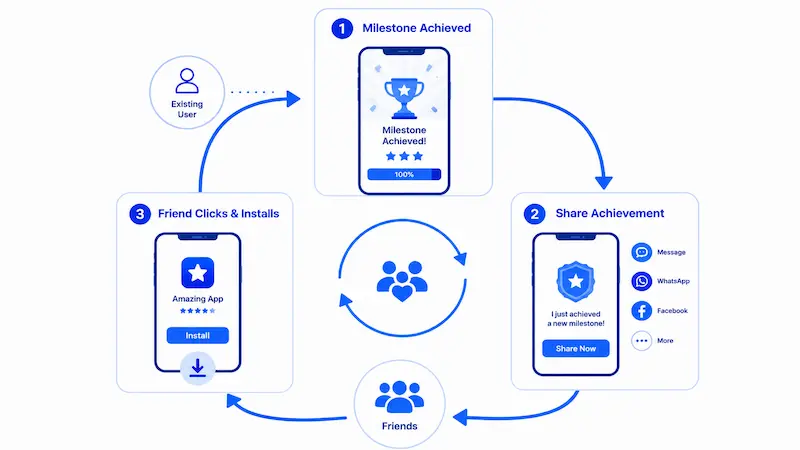
Each share acts like a small built-in referral, turning existing users into a steady source of new downloads.A successful referral system should make sharing simple, rewards valuable, and the user experience seamless. When designed well, referral loops consistently boost app downloads and installs while keeping acquisition costs low.
Optimize App Ratings and Reviews to Boost App Installs
User reviews strongly influence download decisions. According to Apptentive’s mobile app ratings research, most users read at least one review before downloading — 77% for free apps and 80% for paid apps. A 2024 MoldStud analysis found apps rated 4.0+ saw 42% higher conversion than those below 3.5, though results weren’t broken down by platform or category.
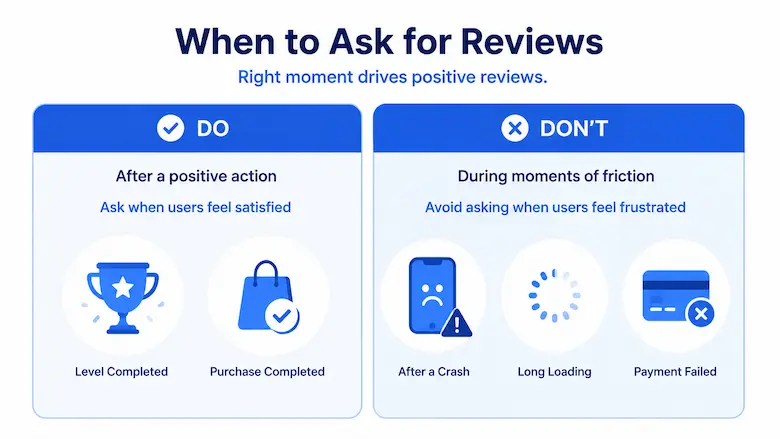
Ask users for reviews at the right moment, such as after completing a positive action. Avoid requesting feedback during moments of friction — right after a crash, a long loading screen, or a failed payment.
Users interrupted at these points are far more likely to leave a 1-star rating out of frustration with that one moment, not their overall experience with the app. Even a handful of these reviews can drag your average below the 4.0 threshold, erasing the conversion advantage that a higher rating provides.
Reply to reviews regularly to show users that their feedback matters. Address problems quickly and keep responses clear, friendly, and helpful.
Localize App Content to Improve User Acquisition
App localization strategies helps apps reach users in different markets by adapting content to local languages, preferences, and search behaviors.
According to localization research by Storemaven, translating and adapting a store listing can lift conversion rates by around 26%. The biggest gains usually show up in markets that haven’t been localized before, rather than markets where the app is already well known and visible.
For example, Taobao localizes its Double 11 festival differently in each market. In Hong Kong, new users got a “red packet” reward for their first login. Orders over 99 yuan also came with free shipping. The ad campaign got hyper-local too. Cantonese slogans played on real neighborhood names, placed right at matching MTR stations. This outdoor campaign covered 59 MTR stations. It blended online and offline touchpoints, so ads followed users from their commute into the app.
Even the free shipping threshold changed by market. Hong Kong’s threshold was 99 yuan, while Malaysia’s was set at 199 yuan. These details show localization goes beyond translation. Taobao adjusts pricing, rewards, and even street-level ad copy to match each market’s habits.
Effective localization goes beyond translation. Apps should optimize keywords, app titles, descriptions, screenshots, and preview videos for each market. Developers should also consider local culture, payment habits, and user needs to create a more trustworthy experience.
A localized App Store presence can improve search visibility, increase conversion rates, and help apps compete in new regions. Start with markets that show strong demand, then test and optimize localized content based on performance.
Use Pricing Strategies to Boost App Downloads
Offer Free Trials to Build User Trust
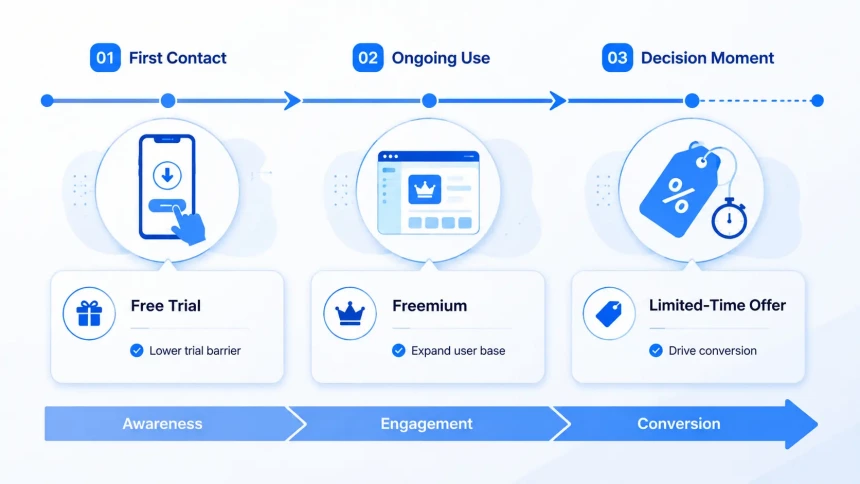
Flexible pricing can reduce user hesitation and encourage more downloads by lowering the initial cost barrier. Free trials give users the opportunity to explore core features and assess the app’s real value before committing to a purchase, which helps build trust and reduces perceived risk.
Adopt a Freemium Model to Boost App Downloads and Drive Upgrades
Freemium models attract a wider audience by providing essential features at no cost, making it easier for users to get started. As users become more engaged, premium features such as advanced tools or enhanced functionality can encourage upgrades and improve long-term conversion rates.
Use Discounts and Promotions to Drive Faster Decisions
Limited-time discounts and promotional campaigns can create a sense of urgency that motivates quicker decisions. Temporary price reductions not only stimulate short-term download growth but can also boost app store visibility and improve overall rankings.
Flexible pricing strategies help apps reduce barriers at different stages of the user journey. Free trials lower the risk of trying an app, freemium models expand the user base and encourage long-term engagement, while discounts and promotions drive immediate actions. Together, these approaches can improve user acquisition, increase conversions, and support sustainable app growth. Strategic pricing is also a practical lever to boost app downloads and installs during launches or seasonal campaigns.
Use Media Promotion to Support Long-Term App Growth
Media promotion helps apps gain visibility through news coverage, blog posts, app directories, and review websites.
To support long-term growth, developers should build relationships with niche communities, submit apps to relevant platforms, and reuse media coverage.
Focus on niche websites and online communities before targeting major media outlets. These platforms attract engaged users and industry professionals who discuss real problems and emerging trends. Journalists covering tech and apps monitor these communities for story ideas. Sharing valuable, well-explained content in the right community often works better than direct pitches to major outlets.
Submitting apps to directories, review websites, and product launch platforms creates more chances for discovery. Each channel may bring little traffic alone, but together they build exposure and support long-term organic growth.
Beyond channel choice, developers must craft a compelling story when contacting media outlets. A simple app launch is usually not enough to attract attention. Focus instead on unique ideas, founder stories, user growth, or achievements that give editors a clear reason to cover the app.
Media coverage should also be reused as trust signals across marketing channels. Featuring media mentions on your website, app store page, and social profiles strengthens credibility and makes users more confident about downloading.
Media promotion is not the best starting point for every app, though. It often requires more time, budget, and a strong story to deliver results. For early-stage apps, focus on ASO, content marketing, social media, and referral programs first. Once the app has stronger results and market validation, media promotion becomes a more effective growth strategy.
Retention and Analytics: Turning Downloads into Long-Term Growth
Every strategy above helps you get someone to install your app. But installs mean little if users delete the app days later. Retention determines how much each install is actually worth. A download only pays off if the user sticks around, so download growth and retention need to be measured together, not separately.
- Build push notifications into your retention plan early. Timely, relevant messages bring lapsed users back and build habits for active ones. You can even boost app installs using push notifications: send a prompt right after an achievement or milestone, and users are far more likely to share the app with friends — pointing new users straight to your install page.
- Update your app often. Regular updates show users and app stores that the app is actively maintained. This helps both retention and visibility.
- Track retention by cohort and by channel using App Store Connect. Watch Day 1, Day 7, and Day 30 retention rates alongside session length, then compare these numbers across acquisition channels — scale up the ones with the strongest 7-day retention and cut or renegotiate the ones bringing in installs that don’t stick.
Build a Sustainable App Growth System to Boost App Downloads and Installs
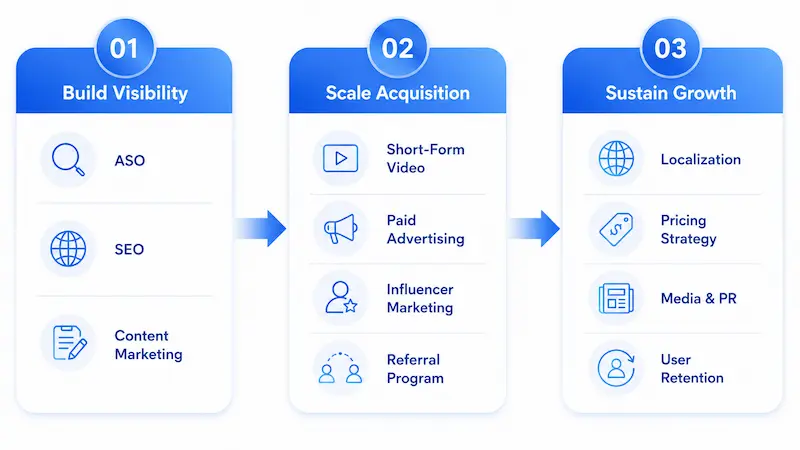
Boosting app downloads is not about relying on one single channel. Sustainable growth — a steady app downloads boost that compounds month after month — comes from building a system that combines visibility, acquisition, conversion, and user retention.
Start with low-cost and manageable strategies such as ASO, off-store SEO, content marketing, and ratings management. These methods improve search visibility, strengthen store conversion, and attract users through organic channels. Building this foundation first helps apps create a stronger position before investing more resources into paid growth.
Once the app gains initial traction, expand into strategies that require more budget, resources, and optimization. Paid advertising, influencer marketing, referral programs, and short-form video can help reach larger audiences and accelerate downloads. These channels work best when supported by a strong foundation built in the first phase.
Long-term growth depends on continuous improvement and data-driven decisions. Localization helps apps enter new markets, pricing strategies reduce conversion barriers, and media promotion builds credibility. At the same time, track retention and performance across channels to identify what works and scale the strategies that deliver lasting value.
A successful app growth system is built through consistent execution, testing, and optimization. Move through each phase step by step, measure results along the way, and continue improving every part of the growth process. The real goal is a repeatable system that continues to boost app downloads and installs long after any single campaign ends.