

Mobile app growth is no longer driven by a single optimized store listing. With increasing competition, users discover apps through multiple touchpoints—search results, social media, reviews, and store pages—before deciding to install. Therefore, sustainable download growth requires a connected growth system that combines multiple channels.
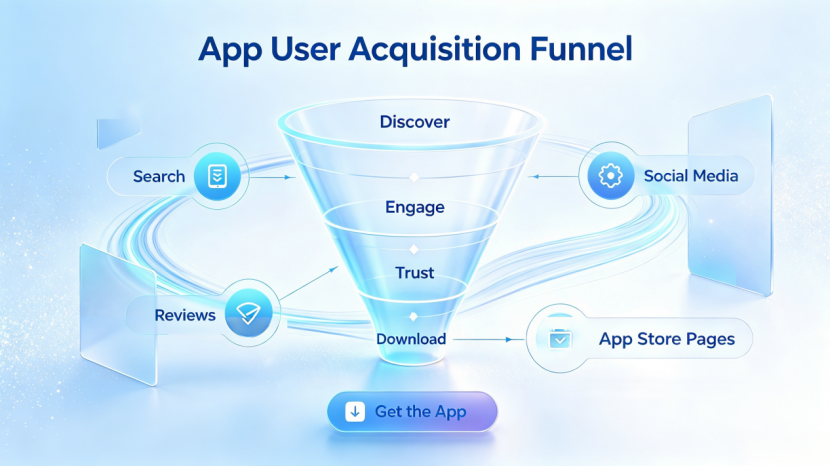
Alt text:App download and install funnel showing how users discover apps through search, social media, reviews, and app store pages before downloading
Growing an app successfully requires more than isolated marketing tactics. Sustainable download growth comes from a connected user acquisition journey, where each strategy supports discovery, conversion, and retention. TThis guide covers 8 proven strategies to boost app downloads and installs,including App Store Optimization, content marketing and SEO, social media marketing, and more. They create a sustainable growth system rather than short-term spikes.
How to Choose the Right Strategy for Your App’s Stage
Not every app needs the same growth strategy. The right approach depends on your app’s current stage, goals, and available resources.
| App Growth Stage | Key Challenges | Recommended Strategies |
| Early-stage Apps | Limited brand awareness, low organic traffic, and difficulty gaining the first users | App Store Optimization (ASO) app localization content marketing and SEO |
| Growth-stage Apps | Expanding reach while maintaining reasonable acquisition costs and consistent user growth | Social media marketing viral growth and partnerships paid user acquisition |
| Mature Apps | Maintaining user engagement, increasing conversion rates, and maximizing lifetime value | Conversion optimization data analytics |
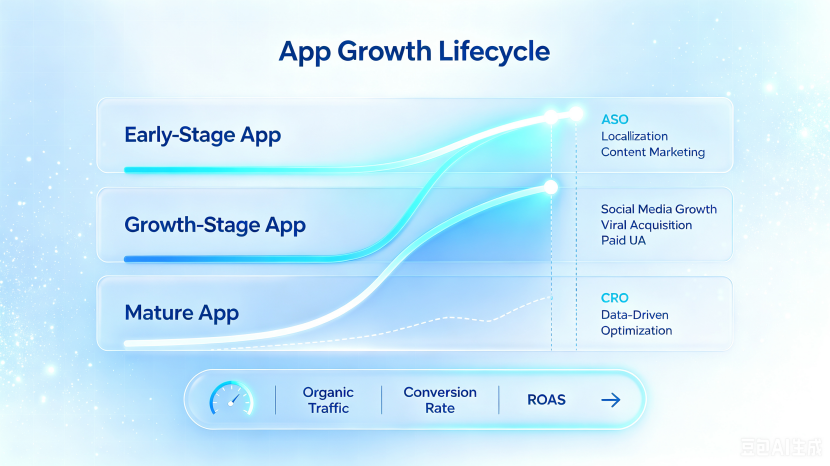
Alt text: App growth lifecycle showing strategies for early-stage, growth-stage, and mature apps
Strategy 1: App Store Optimization (ASO) for Ranking and Conversion
ASO is one of the most effective ways to increase organic app downloads and improve install growth,because app stores remain one of the primary discovery channels for mobile users. Good ASO helps your app show up in relevant searches, attract the right users, and convert more store visits into installs.Unlike paid ads, ASO builds lasting visibility that compounds over time.
1. Optimize Keywords
A strategic ASO keyword optimization process is essential for improving app visibility and increasing organic installs. Keywords determine when and where your app appears in search results. Focus on three factors: relevance, search volume, and competition. Balancing these factors helps identify realistic ranking opportunities and attract qualified users.
Early-stage apps should prioritize relevant, low-competition keywords before targeting broader terms. For example, a budgeting app can start with “expense tracker” or “budget planner” instead of “finance app.” As rankings and authority grow, apps can gradually compete for more valuable keywords and achieve sustainable growth.
2. Optimize Store Listing Copy
While keywords help users find your app, persuasive copy is what actually drives the install. A high-converting listing must clearly articulate what your app does, who it is built for, the core problem it solves, and why it outperforms existing alternatives.
The gold standard of app copywriting is to sell benefits rather than features. For instance, instead of listing dry features like “track expenses, create budgets, and view reports,” frame them as value-driven outcomes: “take control of your spending, build better habits, and hit your savings goals.” Benefit-driven copy helps users understand value faster and can mprove app store conversion rates.
3. Optimize Visual Assets: Icon, Screenshots, Preview Video
A simple, recognizable, and on-brand app icon is essential for standing out in search results, directly boosting your click-through rate when users compare competing apps.
Beyond the icon, screenshots should showcase real outcomes rather than plain UI elements; For a fitness app, that means leading with personalized workout plans, progress tracking, and achievement milestones instead of raw interface screens — an outcome-led screenshot answers “what do I get” before the user has to imagine it themselves.
Adding a short preview video complements these visuals well. It lets users experience the app’s flow and feel before downloading. This reduces hesitation and ultimately boosts installs.
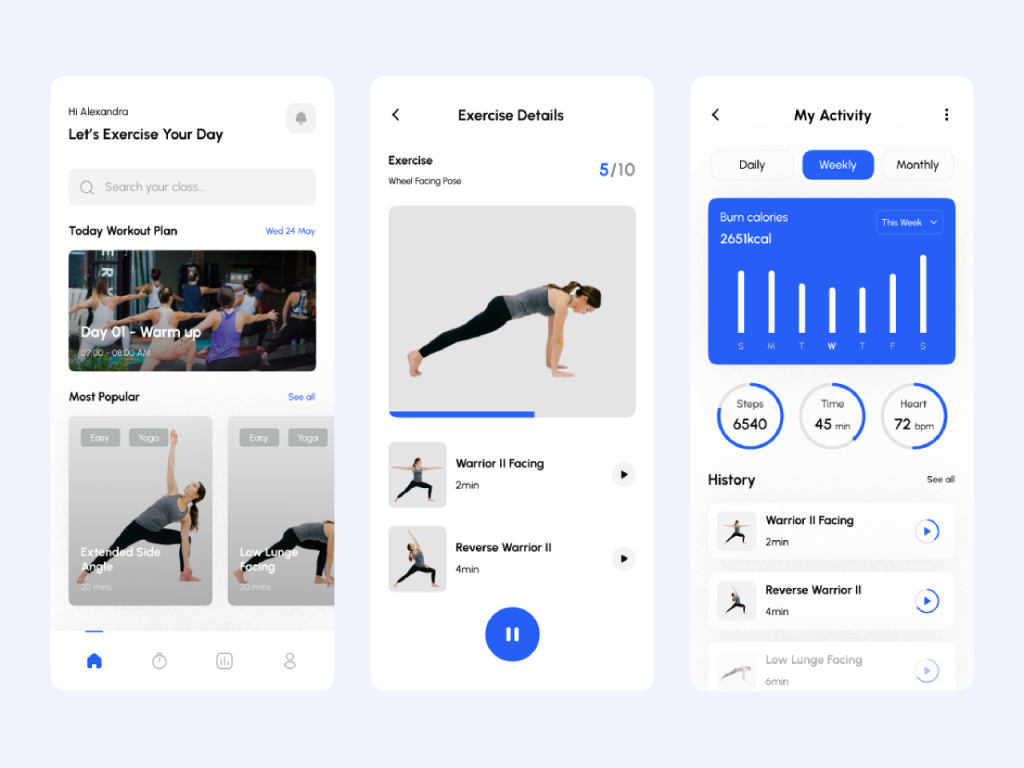
Alt text:Fitness app screenshots: personalized workout plan, exercise progress, and activity stats (calories, steps, history) — outcome-led visuals showing users what they’ll get.
4. Use Native Store Tools
The App Store offer tools for more targeted acquisition:
Custom Product Pages — build different store page versions for different audiences or campaigns. A language-learning app, for example, could show one page for business learners and another for beginners.
Product Page Optimization — A/B test icons, screenshots, and app previews to see what actually drives installs, based on real user behavior instead of guesswork.
In-App Events — promote limited-time content, new features, or special activities directly in the store. A gaming app might use this to spotlight a seasonal event or new challenge.
Using these native tools well can meaningfully boost visibility, conversion, and overall acquisition performance.
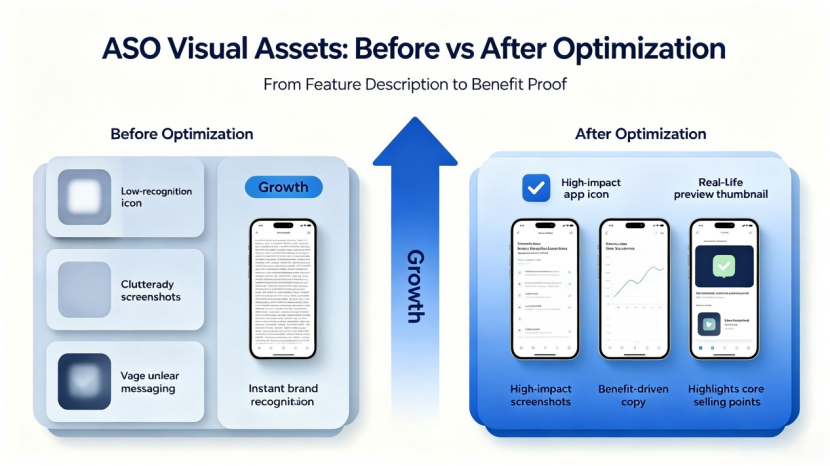
Alt text: Before-and-after comparison of an app icon, store screenshots, and preview video thumbnail showing ASO visual optimization
Strategy 2: Content Marketing and Web SEO for Organic Downloads
While small teams often skip building a website to save time and resources, this shortcut can limit organic acquisition opportunities. For higher-consideration categories such as finance, productivity, and subscription apps, users often compare options and read reviews on the web before installing. A web presence with basic SEO can capture potential users during this decision stage, creating an organic acquisition channel that may reduce reliance on long-term paid advertising.
1. Create Website and Blog Content
A dedicated website gives you a place to educate users, explain your product’s value, and capture search traffic in your category.Effective content types include industry guides, problem-solving articles, comparison pages, feature explanations and educational resources for users.
For example, a meditation app might publish articles on improving sleep, reducing stress, or building mindfulness habits. Users searching those topics can discover the app naturally — often before they’re even looking for an app at all.
Strong content builds brand awareness while steadily attracting organic visitors over time. But creating content is only half the equation — the next step is making sure search engines can actually find, index, and rank it. That is where Web SEO comes in.
2. Optimize Your Site for Search Engines
Web SEO targets high-intent users on search engines like Google long before they enter the app store. Instead of guesswork, executing an effective web strategy requires focusing on specific, tactical optimizations:
Search Intent Mapping: Target long-tail keywords based on different search intents. Prioritize problem-solving queries that reflect users’ immediate pain points (e.g., “how to stop procrastinating as a student”), while treating comparison-focused keywords such as “best habit tracker for students” as a separate commercial-intent category for later-stage users.
Content & Metadata Optimization: Publish clear, value-driven landing pages or articles, ensuring your primary keywords appear naturally in title tags, H1/H2 headings, and meta descriptions to boost click-through rates.
Site Architecture & Backlinks: Maintain a fast-loading, mobile-first structure with clean URL slugs, and earn authoritative backlinks through industry roundups or guest outreach to build domain authority.
3. Create Product Tutorials and Educational Videos
Tutorials and educational videos help potential users understand how an app works before they install it — especially useful for apps with more complex features.
For example: a productivity app can walk through workflow tutorials; a finance app can explain budgeting methods; a fitness app can demonstrate training plans.
Beyond building trust, video can also strengthen your SEO strategy. As one of the largest platforms for video discovery, YouTube allows optimized tutorials to reach users through both YouTube search and Google video results — especially those who prefer visual content over traditional articles.
Strategy 3: Social Media Marketing and Influencer Partnerships for App Growth
While ASO and Web SEO capture users who are actively searching, social media, influencer recommendations, and media coverage reach people who aren’t searching at all — they discover apps through content and voices they already trust.
1. Maintain an Active Social Media Presence
A consistent social presence keeps a brand visible in users’ daily feeds and prevents followers from overlooking it. For example, a fitness app that regularly shares practical workout content on social media can build familiarity and trust while encouraging followers to explore the app for more complete training plans and resources, turning ongoing content engagement into deeper app usage.
Different platforms also serve different acquisition purposes: TikTok focuses on discovery and viral reach, Instagram helps build visual communities, while LinkedIn is often more effective for B2B and professional apps. Choosing the right platform based on audience behavior improves acquisition efficiency.
2. Leverage Short-Form Video for Rapid Reach
Short-form video on TikTok, Instagram Reels, and YouTube Shorts lets users see an app in action within seconds. Effective videos showcase an app’s value through clear visual demonstrations. For example, a photo editing app can show a before-and-after edit to highlight the changes users can achieve. Pairing these videos with direct app links turns that initial interest into an immediate install, allowing users to move from discovery to download without leaving the platform.
3. Partner with Niche Influencers
Follower count alone is not a reliable indicator of influencer performance. Prioritize creators with strong audience alignment and credibility in your app’s niche. A focused tutorial or authentic review can generate better results when the creator’s audience has a genuine interest in the problem your app solves, making users more likely to engage and install.
4. Build Authority with Public Relations(PR) and Media Coverage
Public Relations builds trust that social media rarely can. When a respected publication features your app or you win an industry award, users feel more confident downloading — especially in competitive categories where they’re choosing between many similar options.
For new apps without strong brand recognition, third-party validation such as media coverage, expert reviews, and industry recognition can reduce trust barriers and improve conversion rates.
Strategy 4: Viral Growth and Partnerships to Boost Installs at Low Cost
Viral strategies and partnerships create self-sustaining growth loops. By leveraging current users and strategic business partners, you can acquire high-quality users without relying solely on paid ads.
1. Launch Two-Sided Referral Programs
The best referral programs reward both the inviter and the invitee. Offer clear incentives—like extra features, extended free trials, or in-app credits. Keep sharing effortless. When your app already provides high value, a simple referral setup turns satisfied users into active promoters.
2. Build Cross-App and B2B Partnerships
Partnering with non-competing, complementary apps gives you direct access to users who already need what you offer — and converts them into installs far more efficiently than cold ads.
A travel app partnered with a hotel booking platform can offer that platform’s guests a free trip itinerary and local guide for their booked city, unlocked only after they download the travel app. A fitness app can offer a health food brand’s customers a downloadable workout plan, available only after installing the app. Each partner promotes the other with direct download links, turning existing user bases into new installs at minimal cost.
3. Engineer Product-Led Viral Loops
True viral growth is built into the product itself — not bolted on as a campaign. Unlike referral programs, which rely on external incentives, viral loops run on the product’s own value: users invite others because it makes their own experience better.
This works in a few common ways. Collaboration tools like Google Docs only deliver full value once you invite teammates in. Apps like TikTok let users create content that naturally pulls in new users when shared. And Messaging apps and marketplaces become more valuable simply as more people join, creating organic pull.
When a loop like this is built into the core product, every new user helps bring in more users at almost no extra cost — which lowers cost per install and creates growth that doesn’t depend on ad spend.
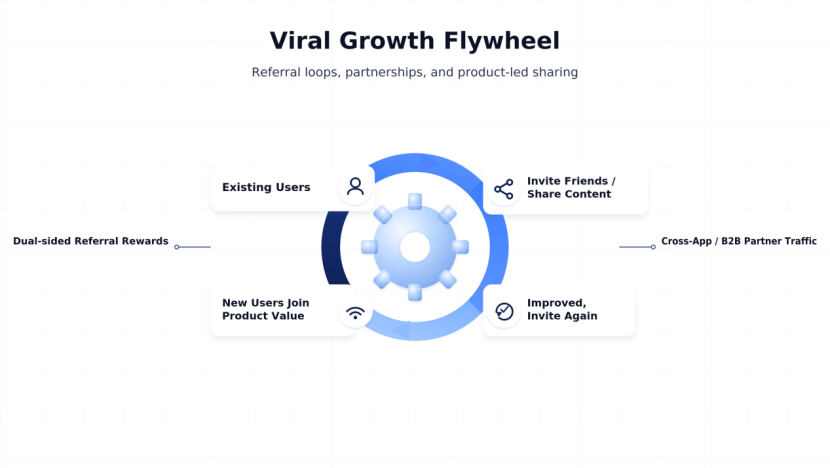
Alt text: Circular viral growth flywheel diagram showing how existing users invite new users through referrals, partnerships, and product-led sharing loops
Strategy 5: Trust and Conversion Optimization for More Installs
Getting discovered is only the first step. Many users visit an app’s store page and leave without installing — often because they don’t see the value clearly, or just aren’t ready to commit. This stage is about strengthening credibility, reducing hesitation, and smoothing the path to install.
1. Encourage Ratings and Reviews
Ratings and reviews strongly influence users’ install decisions. Ask for feedback after users complete a task or reach a milestone — not immediately after installation. Responding to reviews shows users you value their input and helps build trust. Therefore, effective review management can increase app installs and strengthen user confidence.
2. Offer Free Trials and Freemium Models
Free trials and freemium plans let users try before they pay, reducing the hesitation that prevents many people from installing an app. By offering basic features for free or a limited-time premium trial, apps can lower the perceived risk of downloading and give users a reason to experience the product first. Once users have installed the app and seen its value, they are more likely to consider upgrading to a paid plan.
3. Build Trust Through Brand and Experience
User trust comes from more than ratings. A clear app description, professional design, and transparent privacy policies help users feel confident. Smooth onboarding and reliable performance further boost retention and help prevent negative reviews.
Strategy 6: App Localization for New Markets
Localization expands app market reach and increases international installs by helping users discover your app through localized store content and continue using it through a product experience that matches their language, preferences, and expectations. Beyond translating the app store page, successful localization also requires adapting the in-app experience and building trust through local user feedback.
1. Localize Visual Assets and Store Listings
Users in different markets do not search for apps in the same way. Adapt your store listing with localized keywords, screenshots, and descriptions that match local search behavior instead of relying on direct translations.
For example, a fitness app entering Japan may find that local users rarely search using the direct translation of “home workout.” Instead, they search using terms tied to daily habits and body-shape goals — such as “宅トレ”(home training), “自宅トレーニング”(training at home), “ダイエット”(diet/weight loss), “筋トレ”(strength training), and “ボディメイク”(body-shaping). So its keywords, screenshots, and description all need to be rebuilt around those local search terms.
2. Localize the Product, Not Just the Store Page
A translated store page cannot fix a product experience that feels unfamiliar. After users install the app, factors such as payment options, date formats, language support, and local habits can determine whether they continue using it. A subscription app expanding into Europe, for example, may need to support regional payment preferences before scaling acquisition campaigns.
3. Collect and Respond to Local-Language Reviews
Local-language reviews help reduce uncertainty for users who are deciding whether to install an app. Ratings and reviews play an important role in influencing user decisions, as potential users often rely on feedback from other customers to evaluate an app’s quality and reliability. Encourage users in each market to share their experiences and respond in the same language whenever possible. A store page with recent, relevant reviews feels more trustworthy than one filled with outdated feedback from another region.
Strategy 7: Paid User Acquisition and User Outreach for Faster Growth
Paid acquisition only pays off once your store page already converts: buy traffic when you know your install rate and can measure cost per install against retention, not before. From there, pairing that spend with retargeting and post-install outreach is what turns installs into activated, retained users rather than a one-time download spike.
1. Run Paid User Acquisition Campaigns with Apple Search Ads and Google Ads
Apple Search Ads works best for capturing users with existing search intent. Start with highly relevant keywords that match your app’s core value, then expand based on conversion performance and sustainable CPI. If a campaign receives clicks but generates few installs, increasing bids will only scale an inefficient setup — the issue is usually keyword relevance, store page conversion, or creative performance.
Google App Campaigns rely more heavily on machine learning to optimize placements across Search, YouTube, Google Play, and other Google channels. Instead of manually managing every keyword, focus on providing strong creative assets, accurate app information, and a realistic target CPI. Allow the campaign time to learn before making major adjustments.
2. Run Paid Search and Social Advertising Campaigns
Different channels work at different stages of user discovery. A productivity app may rely more on search ads because users actively look for solutions, while a consumer entertainment app may benefit from video campaigns that create demand. Evaluate each channel by cost per install and post-install behavior rather than download volume alone.
3. Use Paid Retargeting to Recover Interested Users
Not every interested user installs an app on the first visit. Retarget users who viewed your store page or engaged with an ad, but avoid treating all audiences the same. Someone who visited your store page multiple times without installing needs a different message from someone who only watched a short video ad.
4. Use Multi-Channel Outreach to Improve Retention
A paid ads has little value if users never complete the first key action. Use multiple post-install channels to drive activation, such as in-app onboarding messages that guide users through setup, push notifications that remind inactive users to return, and emails that re-engage users who drop off.
Measure success through activation rates and day-7/day-30 retention, rather than output, to determine whether these efforts turn paid ads into long-term users.
Strategy 8: Analytics and Optimization for Long-Term Growth
Three numbers tell you whether growth is working: impressions, conversion rate, and cost per install. racking these metrics helps teams optimize acquisition performance, improve growth efficiency, and increase retention and conversion over time.
1. Select Analytics Tools and Measure Performance
Start with the store consoles to monitor basic performance metrics, such as impressions, product page views, and conversion rate. As your app grows and you need deeper insights into user behavior, add a product analytics tool to track retention and engagement. Once paid acquisition becomes a key growth channel and cost per install becomes an important decision metric, introduce attribution tools to measure campaign performance more accurately.
2. Use A/B Testing and Data-driven Optimization
A/B testing helps identify which app store changes improve conversion performance. Test elements such as screenshots, descriptions, and pricing options to see which versions generate more installs from the same level of traffic. Test onboarding flows separately, using activation and retention metrics rather than download numbers.
3. Monitor User Feedback
User feedback reveals problems that download data alone cannot explain. Analyze reviews, support requests, and usage patterns to find friction points in the app experience. For example, repeated complaints about a confusing sign-up process may indicate an onboarding issue rather than a marketing problem.
4. Release Regular Updates and Refine Strategies
Regular updates help maintain user trust after installation. Prioritize fixes based on user impact instead of releasing changes only to create activity. For example, removing a frequently reported bug may improve retention more than adding a new feature that few users request. After each update, review retention and conversion rate changes to identify what works and adjust the next release priorities accordingly.
Create a Sustainable App Growth Strategy
Growing app downloads takes more than one channel. A single short-term campaign isn’t enough either. It comes from combining multiple strategies that work together across different growth stages. Early-stage apps often focus on building visibility through ASO and content marketing, while growing apps can expand their reach through social media, partnerships, and paid acquisition. As apps mature, conversion optimization and analytics become essential for improving retention and maximizing lifetime value.
These strategies are not independent tactics; together, they create a connected system that consistently help boost app downloads and installs—moving users from discovery to download and long-term engagement.Instead of trying to invest in every channel at once, apps should prioritize the strategies that best match their current stage and gradually expand their growth efforts over time.