


Google Play ASO is entering a new phase. Keyword rankings have not disappeared, but their influence is changing. In the Gemini era, ranking for high-volume keywords alone is no longer enough. Google is shifting from keyword matching to understanding user intent, meaning apps need to communicate their value clearly across metadata, websites, and user-facing content.
At Google I/O 2026, Google confirmed that Gemini is becoming a core part of the Google Play discovery experience. Through features like Ask Play and Gemini app integration, users can now find apps through natural conversations instead of traditional keyword searches. Gemini evaluates apps based on context and meaning, helping users discover apps that better match their needs.
This does not mean traditional ASO is dead. Keywords, rankings, and metadata still matter. However, their role is evolving. Instead of only helping apps rank for specific queries, they now help AI systems understand an app’s purpose, features, and relevance. ASO teams need to optimize for both human users and AI-driven discovery systems.
This article breaks down the major Google I/O 2026 updates that affect Google Play ASO. We will explain how Gemini is changing app discovery, what signals matter in the new search environment, and how ASO teams can adapt their strategies.
Key Takeaways
- Search is shifting from keywords to intent. Google Play now matches apps to what users mean, not just the exact terms they type.
- Ask Play adds conversational search inside Google Play. Users ask the Store questions and get AI-curated app recommendations.
- Semantic understanding rewards clarity over keyword stuffing. Gemini reads the whole listing for meaning, relevance, and value.
- Guided Search turns broad queries into multi-step conversations. Listings must cover search intent groups, not just individual keywords.
- The Gemini app is now a standalone discovery surface. Users can find and install apps without ever opening Google Play.
- Universal Cart unifies shopping across Google services. E-commerce apps must optimize product data beyond the store.
- Generative UI completes tasks directly in Search. Utility apps face substitution risk and must highlight differentiated value.
- Ask YouTube opens video-based app discovery. Video assets now feed AI-driven recommendations.
- SynthID flags AI-generated content. Authentic, real screenshots build trust in AI discovery.
- Engage SDK and Gemini localization expand reach. Content surfaces to 30M+ users, and listings auto-fill across languages.
- Play Games Sidekick and new Console insights add AI support. Better engagement tools and AI-powered analytics for developers.
What Google I/O 2026 Announced for Google Play
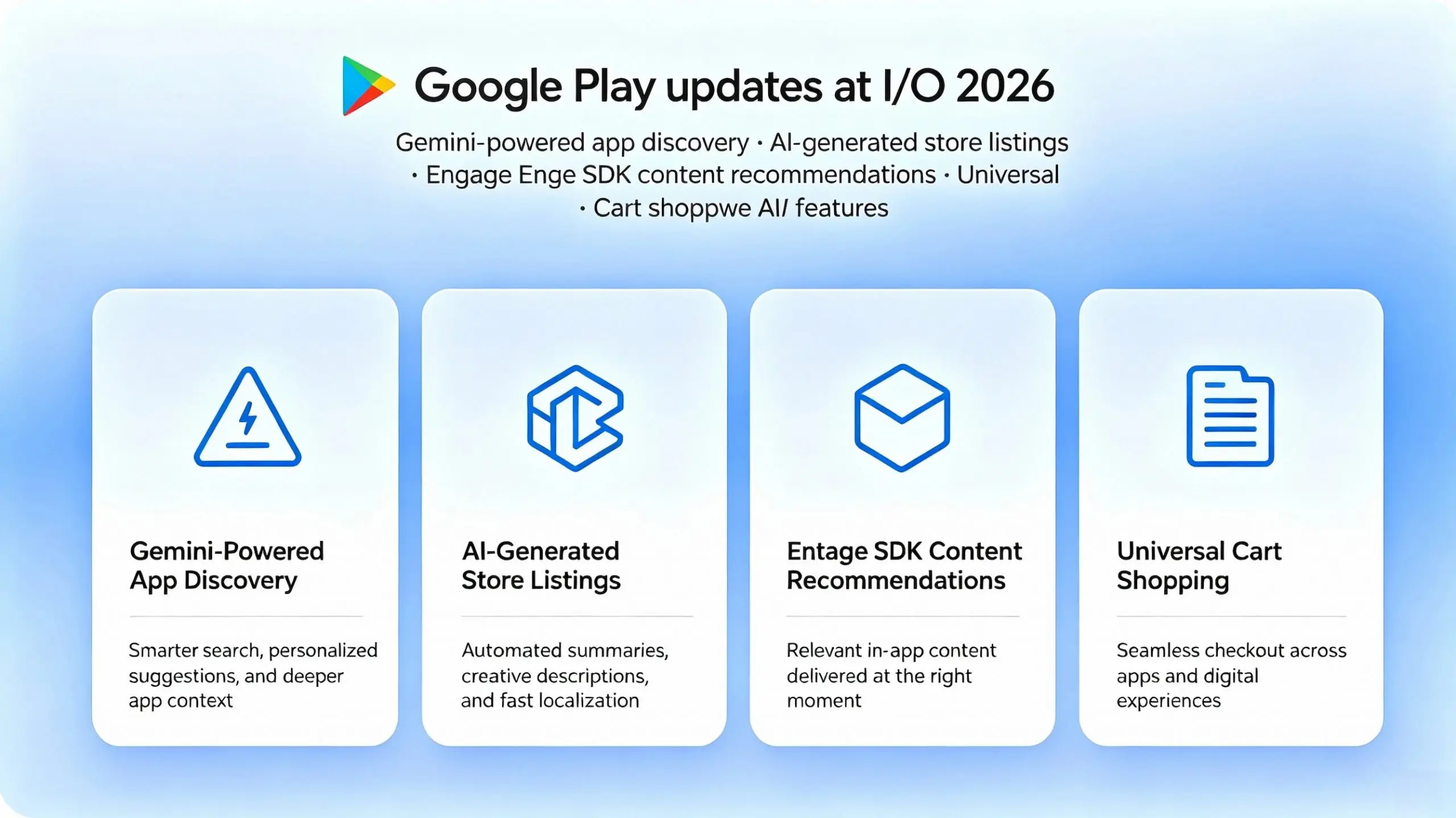
Gemini will provide users with app suggestions and direct access to entertainment content during a search. This was one of several Google Play updates announced at Google I/O 2026.
Google also expanded Engage SDK. It now surfaces content to over 30 million monthly active users. Localization became easier as well, with Gemini models able to pre-populate Play Store listings across multiple languages.
Beyond Google Play, Google also introduced Universal Cart, an AI-powered shopping experience that works across Search, Gemini, YouTube, and Gmail. Google has not announced any integration between Universal Cart and Google Play app listings, so there is currently no evidence that it affects app discovery or ASO.
Overall, Google announced a broad set of Gemini-powered experiences across its products. Google Play received several updates focused specifically on app discovery, localization, and user engagement. The sections below examine each Play-related change in more detail.
Ask Play: Gemini Brings Conversational AI to Google Play
Google Play has offered an AI-powered Q&A experience for about a year. The system already answers roughly 95% of user questions about apps. At Google I/O 2026, Google expanded this capability with Ask Play, a more conversational, Gemini-powered experience.
Users can now ask natural-language questions such as, “What’s the best app for tracking my running without a subscription?”
Instead of returning a standard list of search results, Ask Play generates AI-curated recommendations based on the user’s intent. It appears as a Gemini-powered chatbot overlay directly within Google Play app listings.
Ask Play is available for both installed and non-installed users. It also suggests follow-up questions to help users continue the conversation.
This update does not reduce the importance of Play Store listings. Instead, it makes them even more valuable. Ask Play relies on your app’s store listing to understand features, benefits, and use cases when answering user questions.
How Ask Play Uses Store Listings and Websites to Answer User Questions
Ask Play draws from both your Play Store description and your website. It also pulls from the same metadata, website content, and review signals ASO teams already manage.
Google says Ask Play generates answers using app metadata, user reviews, and inferred context. This means your listing is now source material for an AI answer, not just human readers.
Your long description is now parsed by a language model, not just skimmed by a user. One key tip is to front-load your strongest positioning and be specific about what your app does.
It also helps to align your website and store listing. If the two send different messages, Ask Play may struggle to give a clear answer.
How Gemini Is Reshaping Google Play Search Results
Google Play search is moving from keyword matching to intent-based discovery. Gemini helps Google understand what users want, not only what they type.
In the past, users searched with short keywords such as “video editor” or “social app.” Google mainly matched these terms with app titles and descriptions. Now, AI-powered search can understand the meaning behind a query and recommend apps based on user needs.
Ask Play represents this shift. The Gemini-powered feature allows users to search through natural conversations. Instead of typing “budget app,” users can ask, “Which app helps me track monthly expenses automatically?”
Gemini can analyze information from app listings and developer websites to generate relevant answers. This means app visibility will depend on more than keyword placement. Google also needs to understand an app’s features, use cases, and benefits.
This changes how ASO works. Keywords are still important, but their role is changing. They now help Google understand an app’s category, functions, and target users.
Apps that only add popular keywords may lose visibility in AI-driven search. Listings with clear feature descriptions and strong value propositions are more likely to match user intent.
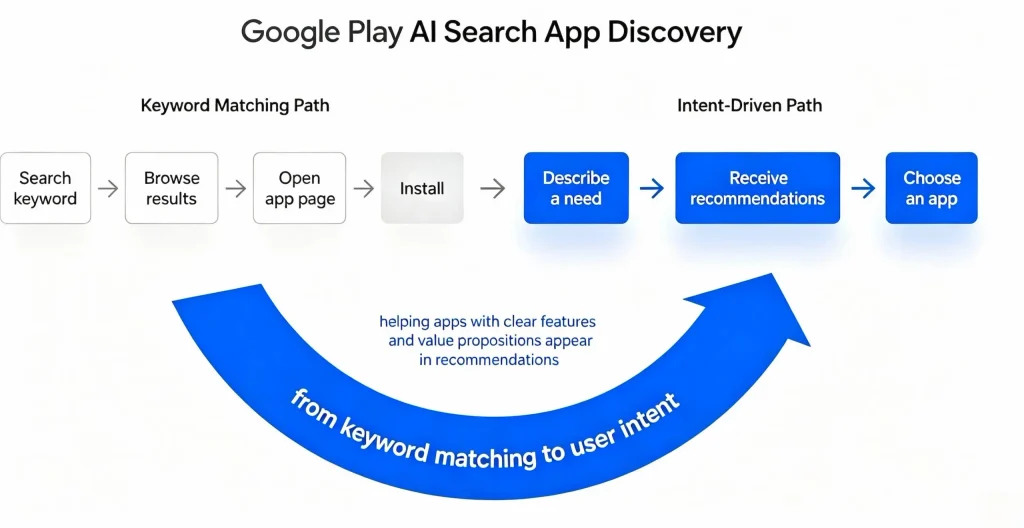
AI search also changes the traditional discovery path. Previously, users followed this journey:
Search keyword → Browse results → Open app page → Install
With AI-powered search, the process becomes shorter:
Describe a need → Receive recommendations → Choose an app
AI-generated answers may take more space in search results. This can reduce the impact of traditional rankings for broad keywords. An app ranking first for a general term may not always receive the most attention.
For ASO teams, the goal is shifting from “ranking for keywords” to “becoming the best answer for users.” App listings need to explain what problems they solve and why users should choose them.
Key optimization areas include:
- Improve metadata relevance: Use titles and descriptions to explain features and user benefits clearly.
- Keep content consistent: Align information across the Play Store listing and official website.
- Highlight specific use cases: Explain how the app helps users complete specific tasks.
- Optimize for long-tail queries: Conversational searches often include detailed user needs.
The future of Google Play ASO will focus less on matching exact keywords and more on understanding user intent. Apps that provide clear, structured, and meaningful information will have a better chance of being discovered through Gemini-powered experiences.
Guided Search: An Existing Shift Toward Conversational Queries
Guided Search has been rolling out on Google Play since September 2025 — it is not a new I/O 2026 announcement, though Google continues to expand it. It changes how users explore apps on Google Play. Instead of showing a simple list of results after a broad search, it helps users narrow down their needs through AI-generated suggestions and follow-up interactions.
For example, a user searching for “travel app” may not know which type of app they need. Guided Search can help refine the query by understanding different needs, such as finding budget travel tools, offline maps, or trip planning apps.
This process changes search behavior from a single keyword query into a multi-step conversation. Users no longer need to guess the right keywords. They can describe their goals, preferences, or problems in a more natural way.
Broad searches are also becoming more competitive. A keyword like “photo editor” can represent many different user intentions, including removing backgrounds, improving portraits, or creating social media content. AI-powered search can separate these different needs and connect users with more relevant apps.
For ASO, this means developers need to optimize for search intent groups, not only individual keywords. App listings should clearly communicate key features, target users, and specific use cases.
A strong listing should answer questions that users may ask during an AI-guided search:
- What problem does the app solve?
- Who is the app designed for?
- What features make it different?
- In which situations would users choose this app?
As Guided Search becomes more common, app discovery will depend less on matching exact search terms. Apps that provide clear context and demonstrate strong relevance will have more opportunities to appear in AI-driven recommendations.
Why Semantic Understanding Matters for Future ASO Strategies
Google Play is moving beyond simple keyword matching. Machine learning systems are increasingly evaluating app listings as a whole to understand their meaning, relevance, and value for users.
In the past, some ASO strategies focused heavily on keyword placement and repetition. Developers tried to add target terms multiple times to improve ranking signals. However, search algorithms are becoming better at understanding context and user intent.
Semantic understanding allows Google to connect related concepts instead of relying only on exact keyword matches. For example, an app targeting “budget planner” may also appear for searches like “track spending” or “manage monthly expenses” if the listing clearly explains these functions.
This shift makes keyword density less important than content quality. Repeating keywords without adding useful information is unlikely to improve rankings. It may also reduce the clarity of the store listing and affect conversion rates.
Future ASO strategies will focus on creating listings that clearly communicate an app’s purpose, target users, and core benefits. Developers need to explain what the app helps users achieve, which problems it solves, and how its features deliver value.
Metadata optimization is no longer about adding as many keywords as possible. It is about creating strong relevance signals for both users and AI systems. A well-structured listing helps Google understand the app’s category, functions, and ideal audience.
As Google Play search becomes more semantic, metadata rewriting will become an important part of ASO. Developers need to optimize listings around user intent, feature relevance, and real search behavior instead of relying only on keyword volume.
Gemini App Discovery: Finding Apps Without Opening Google Play
Google Play is no longer the only place where users can discover apps. As Gemini becomes more integrated into everyday search experiences, app discovery is expanding beyond the traditional app store environment.
The Gemini app can now work as a new discovery surface for apps. Users can describe their needs in a conversation, and Gemini can recommend relevant apps based on the problem they want to solve. In some cases, users can continue toward an app page or installation flow without starting with a Google Play search.
This creates a new discovery path:
User need → Gemini recommendation → App information → Installation
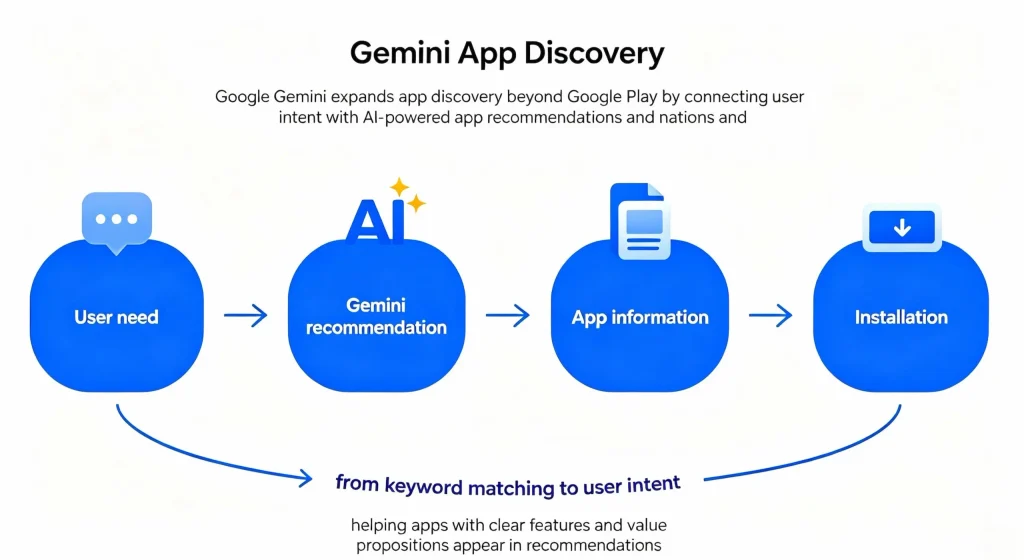
The traditional app discovery process usually starts inside Google Play. Users search for keywords, browse rankings, compare listings, and decide whether to download. With Gemini, the first interaction may happen before users enter the store.
This change expands the role of ASO. App visibility is no longer only determined by Play Store rankings. Apps also need to be understandable to AI systems that evaluate their purpose, features, and user value.
Clear and consistent app information becomes more important in this new environment. If the Play Store listing, website content, and product descriptions communicate different messages, AI systems may have difficulty understanding when the app is relevant.
For ASO teams, the focus is shifting from optimizing only for search results to optimizing for AI-driven discovery. Metadata should provide clear context about what the app does, who it helps, and why users need it.
In the future, app growth will depend on more than winning a position in Google Play search results. Apps that provide strong relevance signals across digital platforms will have more opportunities to be discovered through emerging AI channels.
Other Google I/O 2026 Updates That Could Impact App Growth
Beyond major Google Play changes, Google I/O 2026 also introduced several updates that could influence how users discover, evaluate, and interact with apps.
These changes are not direct ASO ranking updates. However, they expand the number of AI-powered discovery channels and change how app information is presented across Google services.
From shopping experiences and AI-generated interfaces to video discovery and developer insights, these updates create new opportunities and challenges for app growth.
For app marketers, the key shift is that visibility is no longer limited to traditional app store search. Apps need to provide accurate information, strong user experiences, and consistent signals across different Google platforms.
The following updates show how AI is reshaping app discovery, user engagement, and optimization strategies beyond the app store.
Universal Cart: A New Shopping Experience Across Google’s Ecosystem
Google I/O 2026 introduced Universal Cart, a new AI-powered shopping experience. It allows users to manage products from different merchants in one place.
Universal Cart connects shopping activities across Google services. According to Google’s official announcement, it currently works across Search, Gemini, YouTube, and Gmail. Users can discover products through these services, add items to a shared cart, and continue shopping without starting over.
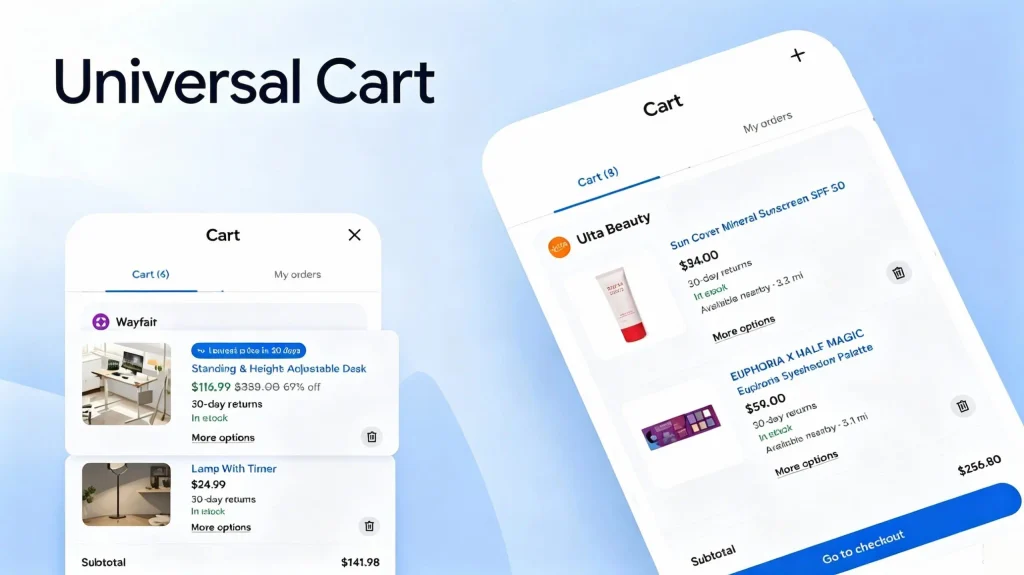
Google has not announced any integration between Universal Cart and Google Play or app listings. As a result, there is no official evidence that it changes how shopping apps are discovered in Google Play today.
Even so, Universal Cart reflects a broader shift toward AI-assisted commerce across Google’s ecosystem. If similar experiences expand over time, users may increasingly discover products before they decide whether to install a shopping app.
For e-commerce app teams, this trend reinforces the importance of maintaining high-quality product information across every customer touchpoint. Accurate product descriptions, pricing, inventory, and structured data can make content easier for AI systems to understand and present.
This complements traditional ASO rather than replacing it. Optimizing a Play Store listing remains essential, but external content quality may become increasingly valuable as AI-powered discovery expands across Google’s products.
At this stage, however, these are potential industry implications rather than announced Google Play features. Universal Cart officially applies only to Search, Gemini, YouTube, and Gmail, making it best viewed as a signal of Google’s broader AI strategy rather than a confirmed change to Google Play ASO.
Generative UI in Search: A New Challenge for Utility Apps
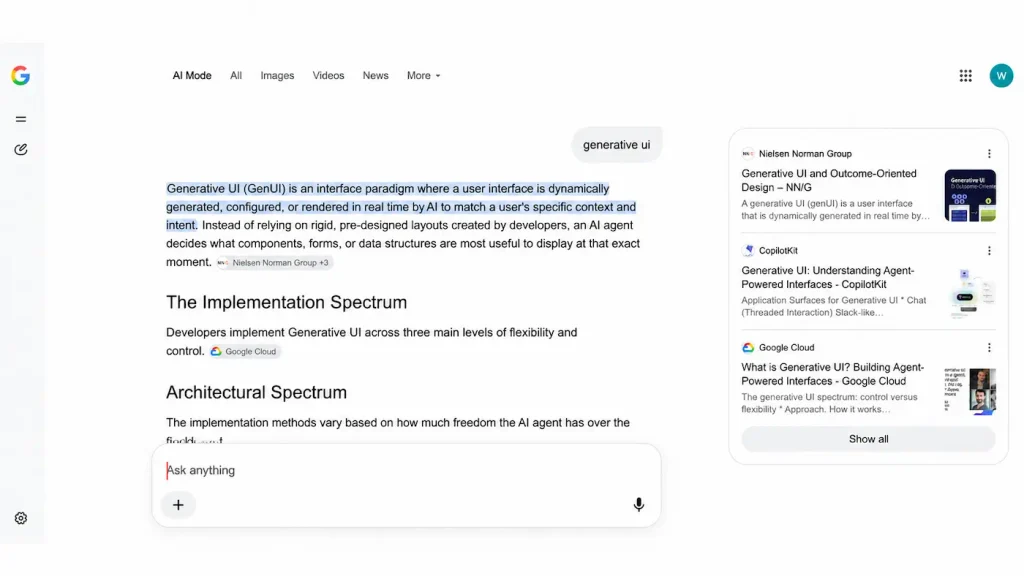
Google I/O 2026 introduced more AI-powered features in Search. One key update is the expansion of Generative UI. Search can now create interactive experiences directly on the results page.
Users can complete some tasks without opening a separate app. They can get answers, explore options, or use simple tools within Search. This may reduce the need for some utility apps.
For utility apps, this creates a new discovery challenge. Many utility apps depend on simple user needs. These include translation, weather checks, calculations, and image editing. AI-generated interfaces can now provide similar experiences directly in search results.
This change may create a substitution risk for basic utility apps. When users can finish tasks instantly in Search, they may not download an app for the same purpose. Traditional app discovery paths could become less effective for simple tools.
However, Generative UI will not replace every utility app. Apps with advanced features, better performance, and personalized experiences can still attract users. The key challenge is showing clear value beyond basic functions.
For ASO strategies, utility apps need to focus on differentiation. App listings should highlight unique features and specific use cases. Developers should also improve their web presence and structured data to support AI-driven discovery.
Generative UI represents a wider shift in search behavior. Search is becoming more than a place to find information. It is becoming a place where users can complete actions. Utility apps need to compete for visibility in these new AI-powered experiences.
Ask YouTube: Expanding AI-Powered Discovery Channels
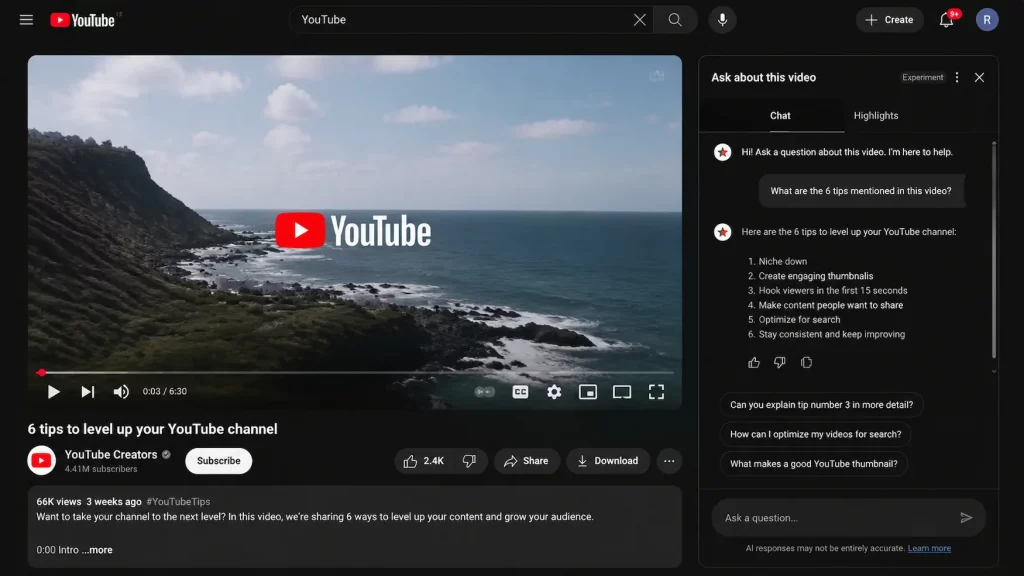
Ask YouTube introduces a new way for users to discover apps through video content. It allows people to explore app-related information through AI-powered conversations.
Instead of searching only in app stores, users may find apps while watching videos or asking questions on YouTube. This creates a new discovery path beyond traditional search channels.
For app marketers, video content may become an important part of future ASO strategies. Apps with strong video assets and clear product information can gain more visibility in AI-driven recommendations.
This change also highlights the need for consistent app messaging across platforms. App descriptions, websites, and videos should provide accurate information for AI systems to understand and recommend apps.
SynthID: Improving Trust in AI-Generated Content
SynthID helps identify AI-generated content and improves transparency across digital experiences. It adds a way to verify whether content was created or modified by AI.
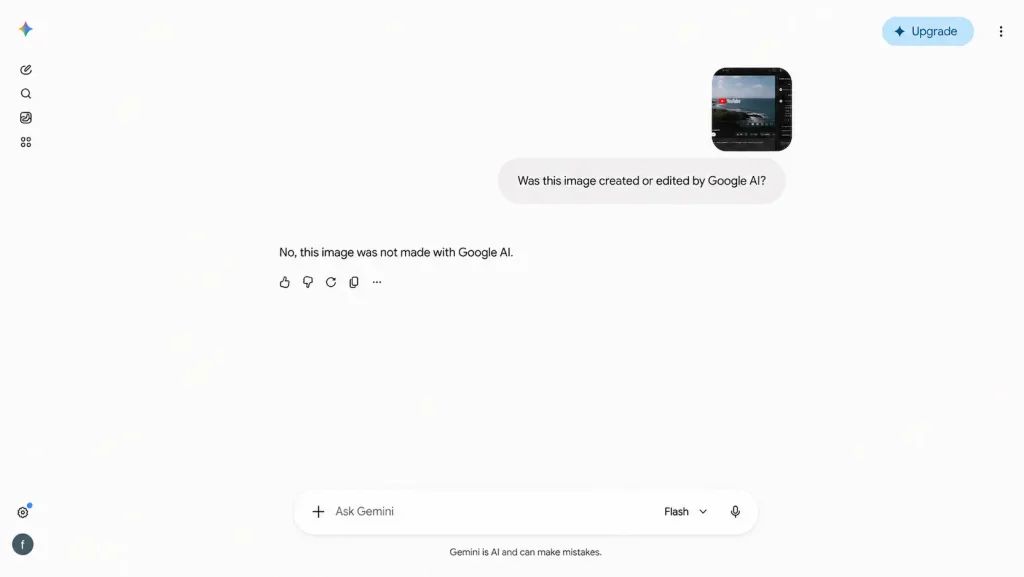
For app marketers, this may change how users view app screenshots and creative assets. AI-generated visuals could face more scrutiny when users evaluate app quality and authenticity.
App developers may need to focus more on real product images and accurate visual materials. Clear and trustworthy screenshots can help build user confidence in AI-driven discovery environments.
Play Games Sidekick and New Play Console Insights
(Image credit: Google Play)
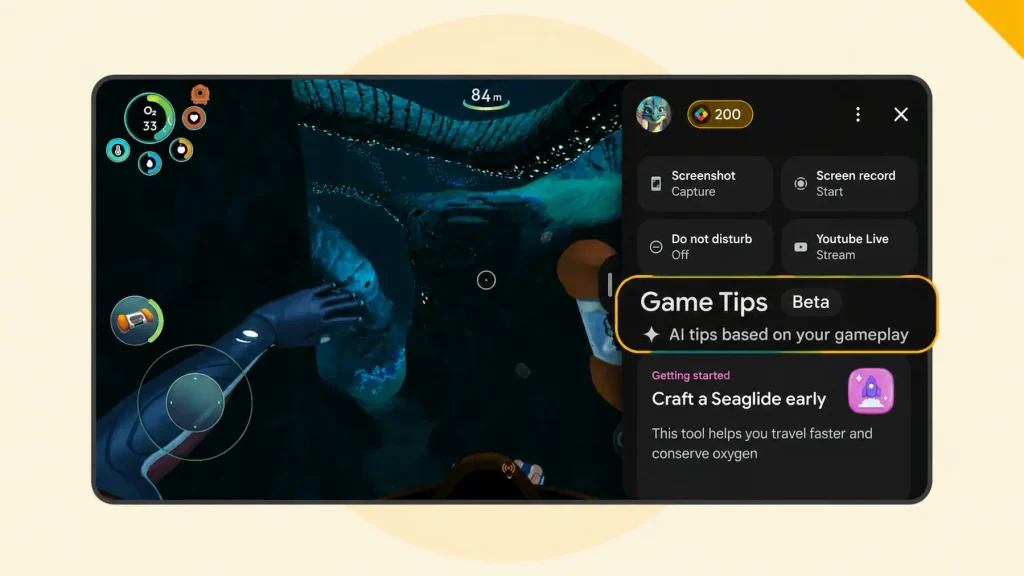
Play Games Sidekick adds a more social layer to Android gaming experiences. It helps players get AI-powered support and interact with games in new ways.
For game developers, this creates more opportunities to improve player engagement and retention. Social features may become another factor that influences long-term user activity.
Google Play Console also introduces new insights powered by AI and advanced metrics. These tools help developers better understand user behavior, app performance, growth opportunities, and how the Google Play rating algorithm responds to new reviews.
For ASO, deeper data insights can support better optimization decisions. Developers can use performance signals to improve store listings and user acquisition strategies.
Google Play ASO Action Checklist for the Gemini Era
The Gemini era is changing how users discover apps on Google Play and beyond. Traditional ASO strategies focused mainly on keyword rankings are no longer enough. Developers need to optimize for AI-driven discovery, user intent, and new recommendation surfaces.
This checklist brings together the key actions needed to adapt to these changes. Each step focuses on a practical improvement, from optimizing store assets and metadata to tracking new discovery channels. The goal is to help apps remain visible and competitive as Google Play evolves toward AI-powered search and recommendations.
Rewrite Metadata for AI Understanding
With Ask Play and Gemini-powered discovery, Google Play is moving from keyword matching toward semantic understanding. AI systems need to understand what an app does, who it serves, and which user needs it can solve.
This shift requires developers to rethink metadata optimization. Instead of treating descriptions as keyword containers, listings should provide clear context about the app’s purpose, features, and user scenarios.
You need to optimize text metadata around meaning:
| Metadata Field | Character Limit | Gemini-Era Optimization Approach |
| App Title | 30 characters | Use the strongest category or core function keyword while clearly communicating the app’s value. |
| Short Description | 80 characters | Highlight the main benefit or user scenario instead of repeating keyword variations. |
| Long Description | 4,000 characters | Build semantic context by explaining features, use cases, target users, and key problems solved. |
For example:
Before (keyword-stuffed):
Title: “Online Shopping App – Buy Cheap Products, Deals, Discounts”
Short description: “Shop clothes, shoes, electronics. Best deals, cheap prices, daily discounts, free shipping.”
After (intent-driven):
Title: “StylePick: Compare Prices & Shop Trusted Stores”
Short description: “Compare prices across 2M+ products, track orders, and get price-drop alerts — all in one app.”
The “before” version repeats keywords but tells neither users nor Gemini what the app actually does. The “after” version answers the four questions AI search relies on: what problem it solves, who it serves, what makes it different, and when to use it.
Traditional ASO strategies often focus on adding high-volume keywords and improving rankings for specific search terms. However, with Gemini-powered discovery and conversational search, Google Play is placing more emphasis on understanding the meaning behind an app listing.
Developers should move away from repeating keyword variations and focus on describing the app naturally. Metadata should explain the app’s core functions, target users, and real-world use cases instead of simply matching individual queries.
For example, instead of optimizing only for isolated terms, developers should consider the broader intent behind searches. Users may describe the same need in different ways, and AI systems need enough context to understand that these queries relate to the same app category or solution.
The title should clearly explain the app’s main purpose. The short description should highlight the key user benefits, while the long description should provide more context about features and use cases. Consistent messaging across metadata fields helps Google better understand the relationship between the app and relevant user needs.
In the Gemini era, successful ASO is no longer about how many keywords appear in a listing. It is about creating meaningful metadata that helps AI systems identify when an app is the right answer for a user’s intent.
Strengthen Visual Assets and Store Experience
As AI-powered discovery features like SynthID and Generative UI become more common, visual assets and store experience become more important. AI systems need clear signals to understand what an app offers.
App listings should keep icons, screenshots, videos, descriptions, and in-app experiences consistent. Low-quality or misleading creatives may reduce user trust and affect app discovery.
Visual assets should show real app features instead of exaggerated claims. This helps AI-driven interfaces provide more accurate app summaries and recommendations.
A complete store page is also important in the Gemini era. Missing screenshots, outdated descriptions, or inconsistent messaging may make it harder for AI systems to understand an app’s value.
Developers should treat store assets as discovery signals, not just conversion tools. They should optimize every listing element to improve both AI understanding and user decisions.
Focus on these areas:
- Create authentic screenshots that show real user flows and key features.
- Keep visual messaging consistent across metadata, creatives, and in-app experiences.
- Update store assets regularly to match new features and user expectations.
- Make screenshots and videos communicate the app’s core value quickly.
Monitor New Discovery Channels Beyond Search Rankings
AI-powered discovery is creating new ways for users to find apps beyond traditional Google Play search rankings. Channels like Gemini App Discovery and Ask YouTube may influence app visibility through AI recommendations and conversational answers.
ASO teams should track more than keyword rankings. New metrics are needed to measure how apps appear in AI-driven discovery scenarios.
Key areas to monitor include:
- AI recommendation visibility: Track whether apps are mentioned or recommended in Gemini and other AI-powered experiences.
- Brand and feature mentions: Monitor how often an app’s key features appear in AI-generated answers.
- Store listing consistency: Check whether AI systems correctly understand and describe the app based on metadata and website content.
- Traffic sources beyond Google Play Search: Measure installs and engagement from AI platforms, video platforms, and other external discovery channels.
- Conversion changes after AI exposure: Compare whether users who discover apps through AI recommendations show different install or retention behavior.
As discovery moves beyond keyword rankings, ASO strategies should expand from ranking optimization to visibility management across multiple AI-powered surfaces.
Adapt ASO for the Gemini Era
Keyword rankings have not disappeared with Gemini’s arrival in Google Play. They have simply stopped being the whole story.
Ask Play, Guided Search, and Gemini App Discovery create new paths for users to find apps — with Ask Play iterating on an existing AI Q&A tool and Guided Search having rolled out since September 2025, both refined further around I/O 2026. These AI-powered surfaces focus on the meaning of a listing instead of keyword repetition.
For ASO teams, the real shift is from chasing a single keyword ranking position to making sure an app is understood and surfaced correctly across every one of these AI-driven entry points. Success in the Gemini era comes from covering more discovery channels, not from fighting harder for the old ones.

